

The Sentinel of the East: A Tale of Vijaynagar’s Patriotic Heart
The sun rose over India on August 15, 2025, painting the skies with the hues of the 79th Independence Day. As the nation buzzed with celebrations, my mind wandered to a remote corner of the country, where the tricolor flutters against a backdrop of rugged mountains and dense jungles—a place called Vijaynagar, the easternmost inhabited outpost of India, tucked away in Arunachal Pradesh’s Changlang district. This is no ordinary village; it’s a story of resilience, patriotism, and a quiet strength that holds the frontier together.

Picture this: a tiny settlement, cradled by the wild embrace of Namdapha National Park’s forests, with Myanmar wrapping around three sides and China looming close. Vijaynagar sits at the crossroads of the Patkai and Kumon ranges, where the air is thick with the scent of earth and the whispers of geopolitics. The Chaukan Pass, a silent witness to history, lies nearby, guarding secrets of a land that feels like the edge of the world.

This wasn’t always a place on the map. Back in 1961, a group of Assam Rifles explorers, led by Major General A.S. Gauraya, stumbled upon this serene pocket nestled between nations. They named it Vijaynagar, after Gauraya’s son, Vijay—a fitting tribute to victory in taming the untamed. On May 7 of that year, the first boots of Assam Rifles personnel hit the ground, marking the birth of a permanent settlement and a strategic foothold. Vijaynagar became the heart of 14 scattered villages, India’s last stand before the borders of Myanmar and China.
For decades, reaching Vijaynagar was a test of will. No roads, no vehicles—just a grueling five-to-seven-day trek through treacherous forests and relentless rains. Locals and soldiers alike braved the terrain, their footsteps etching paths where none existed. I had the privilege of serving this frontier, first as a pilot flying An-32 aircraft, ferrying civil supplies to this isolated outpost, and later as the Air Officer Commanding of the Advanced Landing Ground (ALG). That airstrip, born during the 1962 India-China war for swift troop movements, had fallen into disrepair. Under my watch, we resurfaced it, breathing new life into it by 2019. It became a lifeline—carrying supplies, enabling evacuations, and strengthening India’s grip on this remote stretch.

But life in Vijaynagar isn’t just about survival; it’s about spirit. The moment your plane touches down, you’re swept into the warmth of its people. Among them is Mr. Utsav Pao, an army veteran who runs a private school with a fire in his heart. He gathers the children—bright-eyed kids from the Lisu tribe—and their voices rise in a chorus of Saare Jahan Se Achha. Their Hindi may falter, but their pride doesn’t. You can’t help but smile as they sing, their small hands waving, their patriotism as vast as the mountains around them. Then there are the Gorkha veterans, who’ve made Vijaynagar their home, their stories of service woven into the fabric of this place.
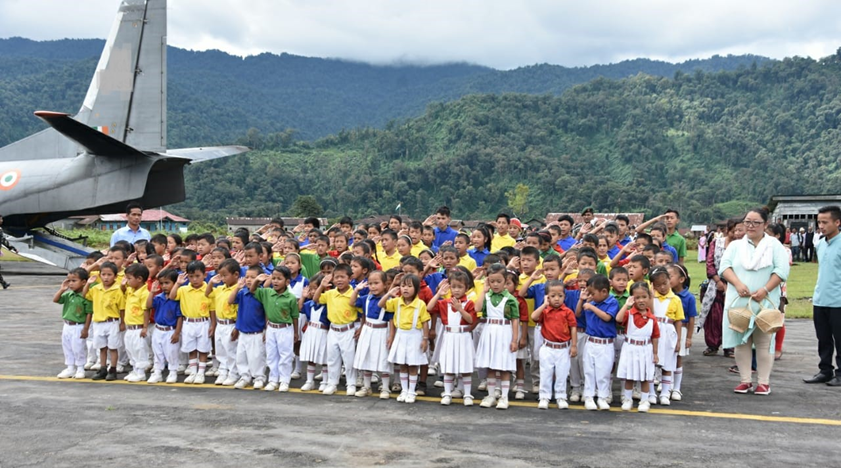
This village is a tapestry of tribal heritage and military grit, stitched together by a fierce love for the nation. The locals, living in near-total isolation, have mastered self-reliance. Roads are new here, a recent gift of progress, but the people have long guarded this frontier with nothing but their resolve. Their customs, flavored by cross-border whispers from Myanmar, blend with an unshakable Indian identity. They are, as I see it, soldiers without uniforms—sentinels of the east, holding the line where India meets the world.
Vijaynagar isn’t just a dot on the map; it’s a testament to what it means to be Indian in the farthest reaches of the land. As I think of it this Independence Day, I’m reminded that patriotism isn’t just flags and anthems—it’s the quiet courage of those who live where the nation’s heart beats strongest, against all odds.
Jai Hind!
Air Cmde SK Verma VSM (Retd)


So beautifully described sir. You remember them and their sacrifices. So many of us do but you brought it to the world. Many thanks sir💐